AM-17 High-Pressure Jet Grouting Rig Heads to Russia: Three Inspection Gates Before Loading
A Russia-bound machine clears three gates before loading
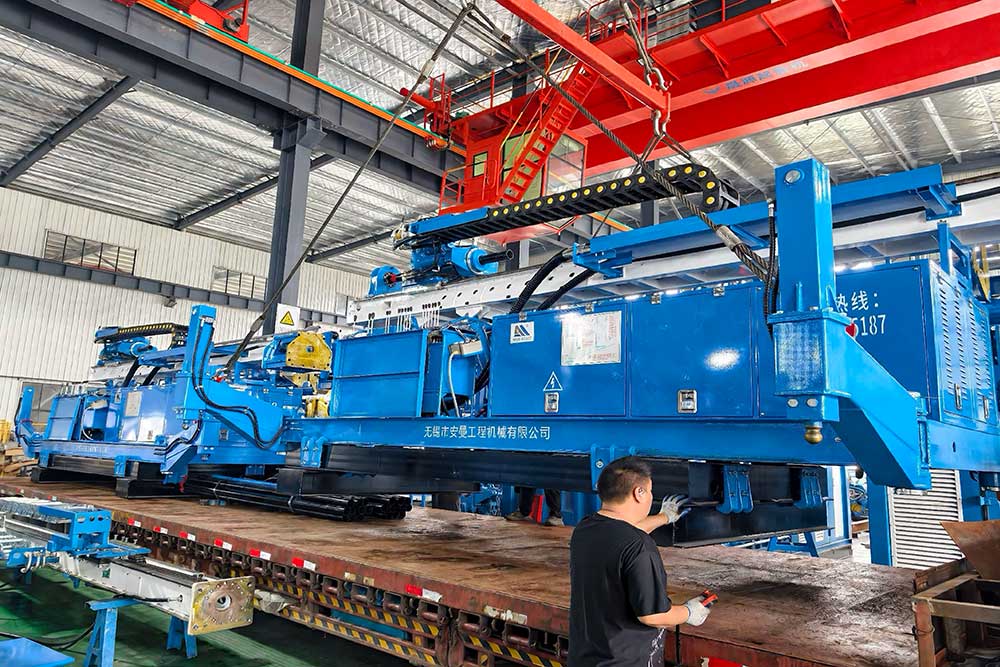
On the morning of September 30, in the final-assembly workshop at the Yangzhou base, a blue AM-17 high-pressure jet grouting rig (jet-grouting version) was lifted by an overhead crane and set squarely onto a flatbed. Its destination was Russia.
Contrary to what many customers picture, before loading, this AM-17 had already been through a complete set of factory inspections — not a few minutes of idling for appearance' sake. Torque is measured with a torque meter, key performance items are checked one by one, and the working motions are run through as a simulation. What they verify is the machine's own assembly quality and performance condition.
Anman's factory inspection runs through three gates:
Gate 1 — whole-machine running-in. A rig is not simply bolted together from parts and shipped. The power head, hydraulic system, feed/hoist mechanism and crawler travel all go through stepped-loading running-in that simulates working conditions: load is raised step by step from low to high, forward and reverse rotation and each gear are switched in turn, and hydraulic oil temperature, system pressure and leakage are recorded throughout. The point of running-in is to surface assembly stress and early faults in the workshop, not on the customer's site.
Gate 2 — performance acceptance. Each design indicator is measured for real: a torque meter reads the power head's output torque, then rotation speed, hoist force and feed force, and hydraulic system pressure are checked; for the high-pressure grouting system, pump pressure and line sealing are tested as well. Every figure is taken against the acceptance sheet and only recorded once it actually meets spec — these are not numbers on a nameplate, they are items that must pass real measurement on the acceptance record.
Gate 3 — function testing. In no-load condition, the tool rotation, hoisting and lowering, mast angling and repositioning, drilling attitudes at various angles, emergency stop and safety interlocks are all run through in the same sequence an operator would follow on site. Only when every motion is smooth, the data pass and the inspector signs is the unit allowed onto the flatbed.
All three gates passed — only then does it load.
Why the Russian customer named the AM-17 jet-grouting version
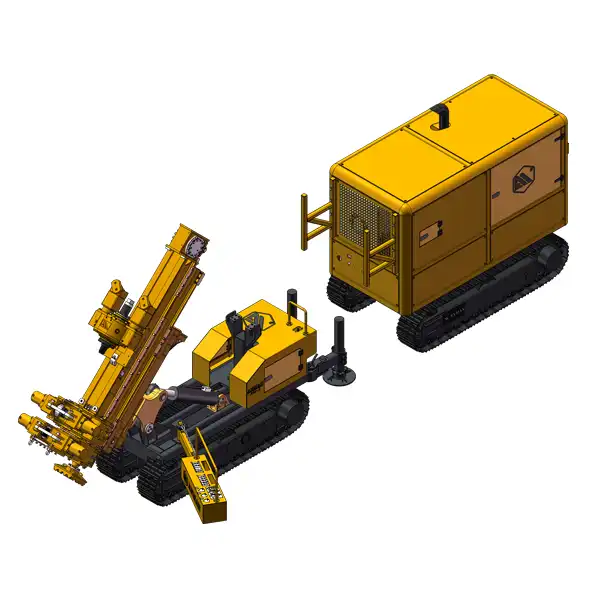
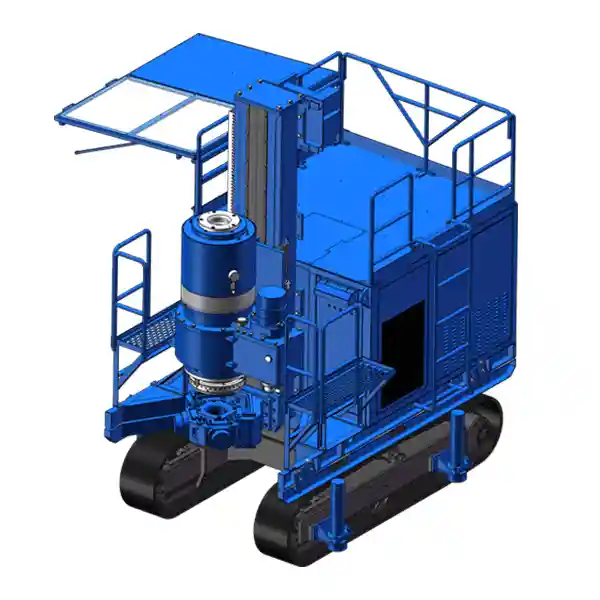
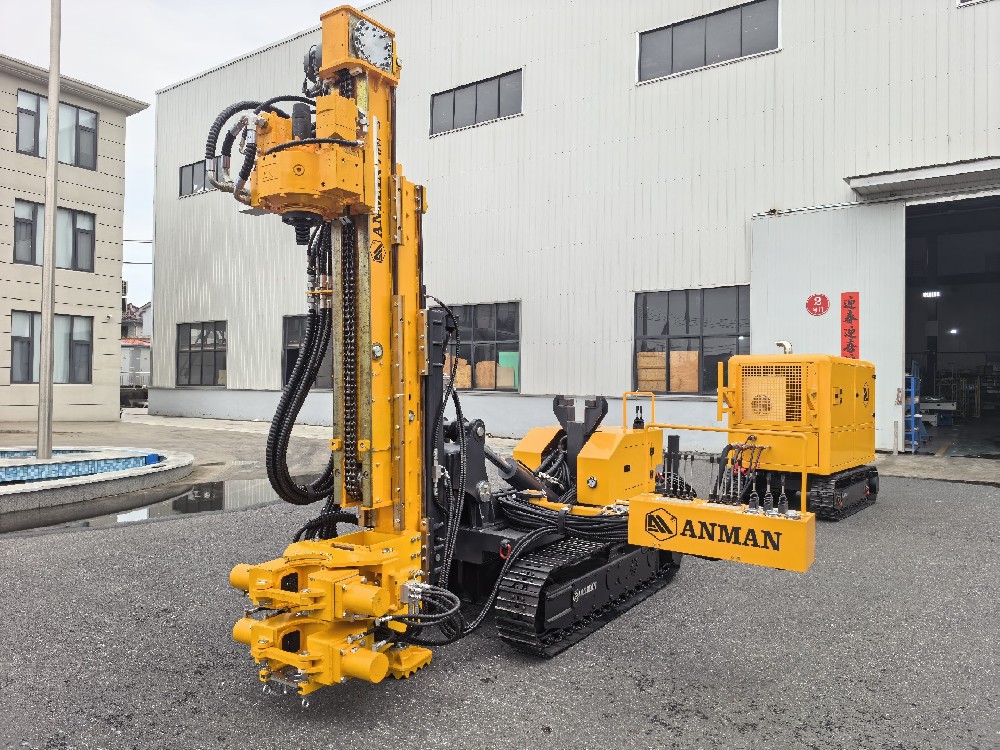
The AM-17 is a proven Anman platform offered in two configurations — an anchor version and a high-pressure jet grouting version. The unit shipped to Russia this time is the jet-grouting version, also a regular on export orders. It earned the Russian customer's specification on a few solid points:
High-pressure jet grouting — cutoff and reinforcement in one process. A nozzle tool is run to the design depth and cement slurry is jetted in at 20–40 MPa, forcefully mixed with the in-situ soil; once it sets, it forms a mass with real strength and low permeability, used for foundation reinforcement, waterproof cutoff (grout) curtains, anti-seepage barriers and ground improvement around underground works. It fits building, municipal and underground projects in soft, water-bearing ground.
Multi-angle column placement. With the mast angling mechanism, vertical and inclined reinforcement holes can all be drilled; one machine covers several reinforcement schemes, with no need to swap equipment for different hole positions.
Crawler chassis, diesel power. A diesel engine is standard, suiting off-grid field sites; for export, the engine emission standard can be selected to meet the regulations of the customer's country and region, supporting registration and market access; the crawler chassis, with 20° gradeability, handles unhardened ground, spoil slopes and gravel surfaces.
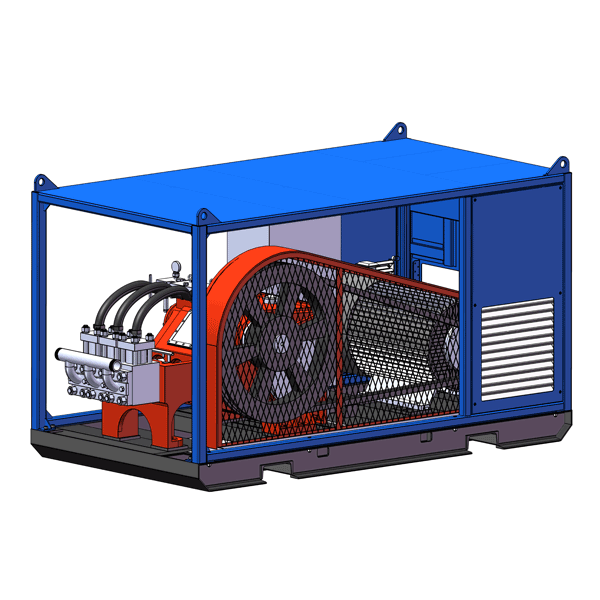
Packaged delivery. It can be supplied as a set with an Anman high-pressure grout pump, a slurry batching/mixing system and jet-grouting tooling — host, pump station, mixing and tools delivered together, ready to run as a group once water and power are connected.
A jet grouting rig and an anchor rig do not solve the same problem: the anchor rig drills tie-backs and cables into the ground for support, while the jet grouting rig injects high-pressure slurry into the soil to strengthen and waterproof the soil itself. On overseas sites where the range of equipment is limited, transport runs into thousands of kilometres and spare-parts cycles are long, the value of one host covering multiple reinforcement jobs, delivered as a package, is even greater than at home.
More than 40 countries — verified one machine at a time in the workshop
Anman rigs now work in more than 40 countries and regions — from Russian frozen ground, to Middle Eastern desert, to the soft soils and dense city areas of Southeast Asia. That figure was not built by blanketing channels or pouring in advertising.
There is a hard reality in construction-machinery export: once a machine is down on a foreign site, the cost is several times what it would be at home. Distances are long, spare parts are slow, labour is expensive and there is a language barrier; when one key unit stops, the schedule of the whole work face is held up. So when an overseas customer reorders a rig, what they look at is never how cheap the first quote was — it is whether the previous unit held up on their site or their peers' sites, and whether someone answered when a problem came up.
Anman has sold its way into more than 40 countries on two unglamorous disciplines:
First, the factory standard is not discounted depending on where the machine goes. Whether a unit ends up on a site in the next province or has to clear customs and ride half a month to Russia, it goes through the same three inspection gates in the workshop. The running-in hours it should get are not cut, and the figures that should be measured for real with instruments such as a torque meter are not skipped. Precisely because every unit is built to that one standard, the machines hold up across very different ground and climate in many countries.
Second, when the machine ships, the service is only beginning. Anti-rust treatment, open-crate securing and a full set of Chinese/English/Russian documents are just the start of an export order; on site there is remote video guidance for installation and commissioning, operator training, 7×24 technical response and reshipment of wear parts and tooling from the two warehouses in Wuxi and Yangzhou — none of it can be missing. Many overseas orders come from repeat customers who were happy with the machine and brought colleagues along.
Take "more than 40 countries" apart and it is simply rigs running properly one after another in those countries, and customers willing to place the next order.
30 working days, from order to shipment
For this Russian order, the lead time, from confirmed configuration to complete-machine shipment, was 30 working days.
An export order differs from a domestic delivery: on top of the usual final assembly and the three inspection gates, it needs export-spec anti-rust treatment, open-crate securing and the accompanying documents (certificate of conformity, inspection report, packing list, Russian/English operation papers). The Anman warehouses in Wuxi and Yangzhou carry stock of common models and spare parts: standard configurations go straight into planned production, while special configurations are built to order.
Inside Anman this approach is called the "teacher model" — what is sold is not a lump of iron, the customer has to be taught to finish the job and make the money. The brand line, "Anman drills keep earning, keep running", rests on the machine rarely being down on site, the operator knowing how to use it, and someone being there if it breaks.
Delivery site
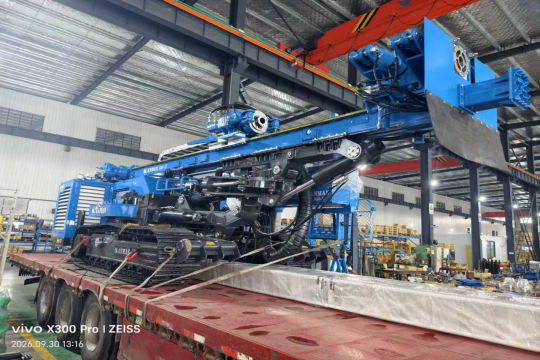
Figure 1: The AM-17 tracked vehicle is positioned and fixed on the flatbed truck.
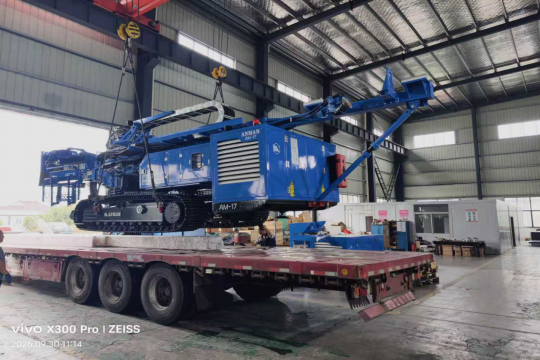
Figure 2: Bridge crane lifting the entire AM-17 unit
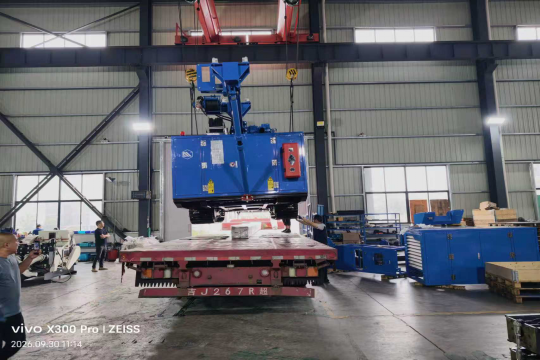
Figure 3: Overall assembly and positioning of AM-17 machine
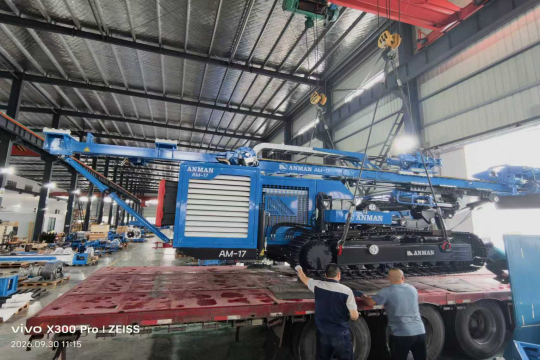
Figure 4: Workers cooperate to guide the entire machine onto the vehicle.
The shipping scene
The September 30 photos record the whole process of this AM-17 high-pressure jet grouting rig being lifted from the workshop onto the flatbed: the crawler tracks settling into place, the wire-rope securing, the inventory of accompanying accessories. From there it will travel overland and clear customs at the border port on its way to the Russian site.
For Anman, shipping is not the finish line. The running-in that should be done is done properly, and the data that should be tested are measured with instruments such as a torque meter, before the unit heads to Russia — all so the customer has one less thing to worry about: once installation and commissioning are complete on site it runs steadily, and they do not have to spend their own schedule tracking down assembly faults on a brand-new machine.
A new rig that finishes its inspection gates at the factory reaches the site in a dependable, ready-to-run state.