First-Time Jet Grouting: How the First Test Pile Was Completed in Gravel and Weathered Rock
— A jet grouting project case from Lucheng District, Shijiazhuang, Hebei, China
The client had reached a new stage of the project: carrying out jet grouting in-house for the first time.
The project was located in Shangzhuang Town, Lucheng District, Shijiazhuang, Hebei, as part of a power line relocation project.
For similar work in the past, the client had relied on third-party contractors for jet grouting. This time, the team decided to build its own construction crew and take control of the process.
But there was one obvious problem:
They had never carried out jet grouting before.
What type of equipment should they use? How should the parameters be set? Could the operator handle a triple-pipe jet grouting rig? And what would happen if the first test pile failed?
Rather than purchasing a machine immediately, the client chose to rent a triple-pipe jet grouting rig from Anman and conduct an on-site trial first.
Ground Conditions: Clay, Gravel and Strongly Weathered Rock
The project required a 15 m drilling depth and a 15 m jet grouting section.
According to the geotechnical investigation report, the ground conditions were:
0–9 m: Clay
9–12 m: Soil with gravel
12–15 m: Strongly weathered rock, with locally moderately weathered rock
For a team carrying out first-time jet grouting, this combination of ground conditions presented several practical challenges.
The clay layer required stable drilling and jetting. The gravel-bearing layer increased drilling resistance and accelerated drill bit wear. Further down, the strongly weathered layer brought changes in equipment load and grout return conditions, making parameter adjustment important during construction.
Based on the ground conditions and the required pile diameter, the client selected a triple-pipe jet grouting process.
Instead of committing to a full equipment purchase before gaining practical experience, the client started with a rental machine and an on-site test.
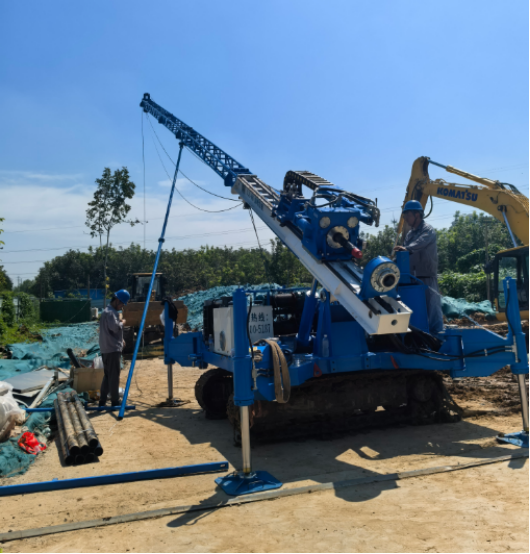
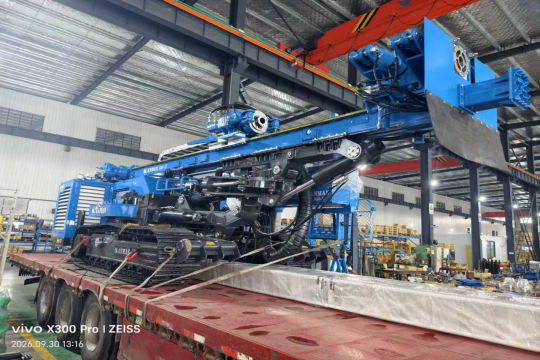
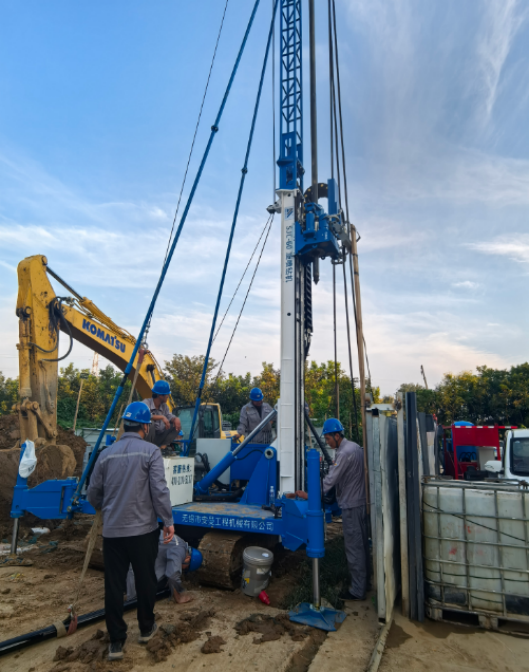
Triple-pipe jet grouting rig at the project site
Before Drilling: Connecting the System and Checking the Parameters
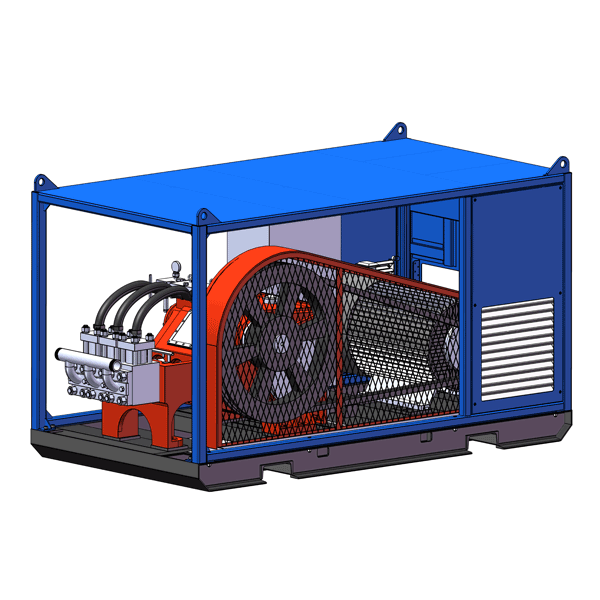
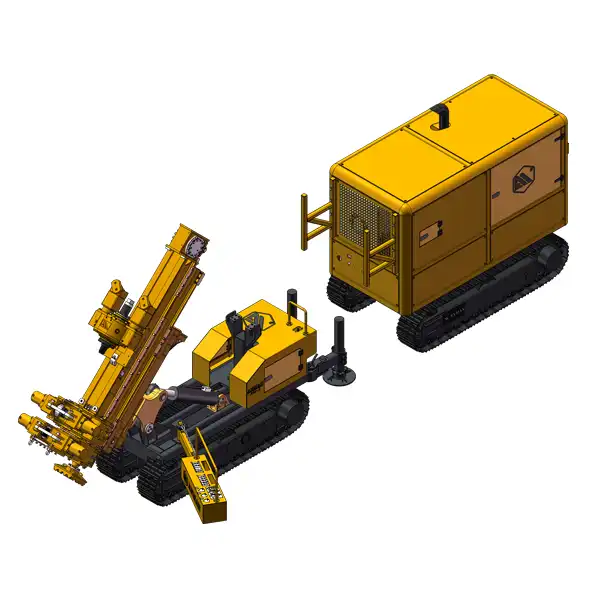
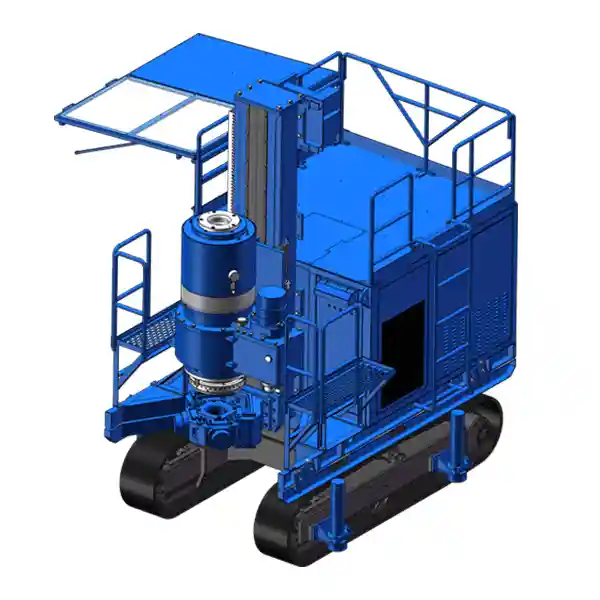
The triple-pipe jet grouting system included the drilling rig, high-pressure pump, air compressor, grout pump and mixing system.
After the front-end and back-end equipment were connected, Anman’s engineer carried out:
Pipeline pressure testing
Equipment linkage testing
Drilling system checks
Jetting system checks
Construction parameter verification
The following parameters were used during the test-pile stage:
| Parameter | Test-pile setting |
| Drill rod | 89 mm triple-pipe drill rod |
| Water nozzles | 2 × Φ1.8 mm |
| Water pressure | 30 MPa |
| Grout nozzles | 3 × Φ3.0 mm |
| Grout pressure | 1–2 MPa |
| Lifting speed | 180 mm/min |
| Rotation speed | 10 rpm |
These were the actual settings used during the test-pile stage of this project. Construction parameters should be adjusted according to the ground conditions, target pile diameter, grout properties and on-site test results.
For the client, the value was not simply receiving a set of general operating instructions. The parameters were checked and adjusted against the actual site conditions before the machine went into production.
12 Hours to Connect the Equipment, One Day to Train the Operator
Equipment preparation was only part of the challenge.
The client’s operator had no previous experience with triple-pipe jet grouting.
Anman’s engineer completed the equipment and pipeline connections within 12 hours, followed by equipment commissioning and parameter verification.
The operator then received one full day of training, combining eight hours of theoretical instruction with hands-on operation.
The training covered the basic working principles of triple-pipe jet grouting, equipment operation and practical adjustments during construction.
For a first-time jet grouting team, this meant the operator was able to learn the equipment while working with the actual construction system, rather than being left to learn through trial and error after the machine arrived.
The Gravel Layer Changed the Drilling Conditions
The first major change came at a depth of around 9 m.
When drilling entered the 9–12 m gravel-bearing layer, drilling resistance increased noticeably and drill bit wear became faster than in the clay layer.
The conditions changed again at 12 m, where the formation became strongly weathered rock.
Equipment load and grout return conditions were different from those in the upper layers, so the original drilling and jetting settings could no longer simply be maintained without adjustment.
Anman’s engineer monitored the drilling resistance and grout return conditions on site and adjusted the drilling and jet grouting parameters according to the actual response of the formation.
The subsequent construction proceeded without rework or an unplanned stoppage.
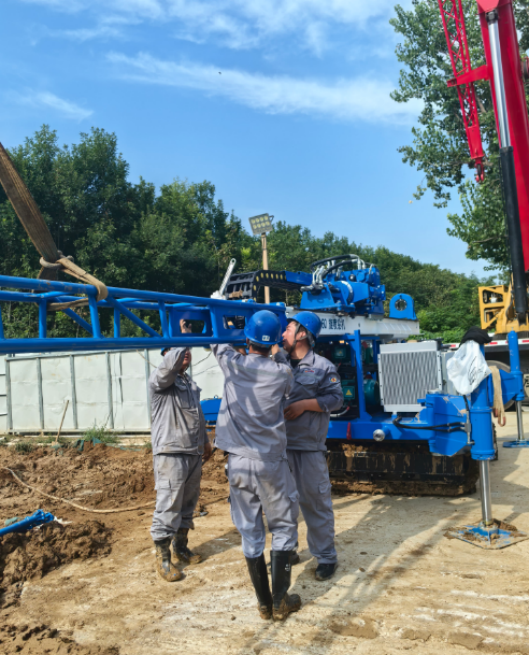
Tower mast installation at the project site
Triple jet grouting construction completed pile,
excavation verification of pile diameter800mm
Test Pile Verification: 800 mm Pile Diameter
The first test pile was then excavated for verification.
The measured pile diameter was 800 mm, matching the project design requirement.
Excavation verification of the triple-pipe jet grouting pile, with an 800 mm pile diameter
For the project team, this was an important checkpoint.
Before the test, their biggest concern was that limited experience with jet grouting could lead to an unsuccessful first pile.
After completing the test pile, the client gained practical experience with the equipment, parameters and construction process, giving the newly established team a clearer basis for subsequent independent work.
What Matters in First-Time Jet Grouting? More Than Choosing a Rig
For companies starting jet grouting for the first time, buying a machine is only the beginning.
The actual construction process involves much more:
Equipment configuration → pipeline connection → parameter setting → operator training → on-site commissioning → adjustment according to ground conditions
If the pump pressure is not properly matched, the parameters are unclear, or the operator does not know how to respond when the formation changes, a problem that looks small on paper can quickly become a costly rework issue.
That is why first-time jet grouting is not simply a question of which rig to buy.
The more practical question is whether the equipment, construction parameters, technical support and operator training can work together on the actual jobsite.
From Equipment Supply to On-Site Technical Support
Anman focuses on the development and manufacturing of jet grouting rigs and provides technical support for customers applying the equipment to real construction projects.
For triple-pipe jet grouting applications, the equipment configuration can include the drilling rig, high-pressure pump, air compressor, grout pump, mixing system and drilling tools according to project requirements.
As a jet grouting rig manufacturer, Anman also provides on-site commissioning and operator training for customers who are building their jet grouting teams for the first time.
The objective is not simply to deliver equipment, but to help the customer understand how the equipment performs under actual ground conditions and gradually build the capability for independent construction.
Planning Your First Jet Grouting Project?
If you are preparing for your first jet grouting project, send Anman’s technical team the following information:
Ground conditions + target pile diameter + drilling depth + jet grouting process
Based on the project information, Anman can provide a preliminary triple-pipe jet grouting rig configuration and construction parameter recommendations for discussion and on-site testing.
Anman — a jet grouting rig manufacturer supporting equipment selection, commissioning and operator training for jet grouting projects.